Who’s Liable After a Wet Floor Slip and Fall in Brooklyn?
Wet floors can be a scary situation for employees and customers alike. After all, wet and slippery floors are the most common causes of slips, trips, and fall accidents. If you’re an employee, a resident or a property manager, it’s important to understand wet floor regulations and premises liability laws so that you can take action if you have been a victim of a slip and fall.
Proving slip and fall wet floor liability is the key to holding negligent parties accountable and recovering the financial compensation you deserve. At the Law Office of Jeffrey K. Kestenbaum, we help individuals and families throughout Brooklyn and New York City pursue the compensation they deserve after wet floor and slip-and-fall accidents caused by unsafe property conditions.
What to Do Immediately After a Slip and Fall on a Wet Floor
If you are injured because a business failed to maintain safe premises, the steps you take immediately after the accident can make or break your premises liability claim against aggressive commercial insurance adjusters:
- Document the Scene: Photograph the accident scene by taking photos and videos of the wet floor, the liquid, and the exact placement (or complete absence) of any warning signs to preserve vital evidence.
- Report the Incident: Alert the store manager immediately and request a written incident report. Do not apologize, minimize your injuries, or say “I’m just clumsy.”
- Identify Witnesses: Gather the names and phone numbers of anyone who saw you fall or saw the spill before you fell.
- Seek Medical Care Immediately: Establish a medical paper trail right away. Even if your pain seems minor at first, adrenaline can mask serious injuries.
Determining Slip and Fall Negligence
Determining negligence in a slip and fall accident is not always a straightforward matter. However, while negligence is determined on a case-by-case basis, there are some characteristics of an accident that can indicate negligence by the property manager or the workplace.
For example, the owner may have known the condition existed and failed to correct it. Poorly lit rooms lacking adequate lighting, unmopped bathroom floors, and unattended paint spills are all examples of a slip and fall danger that a property manager should correct.
Furthermore, if a slip and fall danger existed for such a length of time that the property manager should have discovered and corrected it prior to the slip and fall incident in question, this can indicate negligence as well. For a deeper dive into how this works, you can read our guide on understanding premises liability and how a premises liability or personal injury attorney can help.
Common Locations for Wet Floor Accidents
Wet floor hazards can happen anywhere, especially in busy retail stores and other commercial properties, but pursuing a claim against massive corporations requires a specific legal strategy. We routinely handle complex slip and fall cases against major retailers and grocers. Learn more about how we handle claims against major retailers like Target injury claims, Home Depot slip and fall accidents, or local grocery store chains like Wegmans injury cases.
Do Wet Floor Signs Protect Property Managers from Negligence Claims?
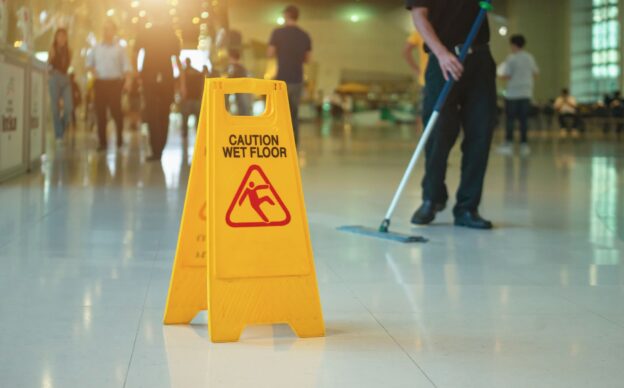
Wet floor signs in the area, warning customers and employees of the hazard, can dispel negligence and civil liability as they raise awareness of a slip and fall danger and reduce the risk of injury. However, just the presence of a wet floor sign can sometimes not be enough. As discussed above, if the owner does not also make an effort to take reasonable and ordinary care of their property, simply warning foot traffic of an impending slip and fall danger may not completely erase or shield the owner from liability in the accident.
Businesses have a duty to keep conditions safe for every customer and visitor. If a business owner does not take swift action to clean up spills, warn customers through appropriate signage, or even regularly mop an entrance area during a particularly rainy day, this is considered a breach of duty. If this breach of duty causes you to slip and fall and suffer serious injuries, then you should seek professional legal assistance and understand your options.
Understanding New York’s Comparative Fault Rules
A common fear victims have is being blamed for their own fall. For example, if they were looking at their phone or wearing smooth-bottomed shoes when they slipped. Fortunately, under New York civil law, the state uses a pure comparative negligence system. This means that even if a jury finds you partially distracted and 20% at fault for the accident, you can still recover the remaining 80% of your damages from the negligent property owner who left the floor dangerously wet.
Common Injuries and Recoverable Damages
Slip-and-fall accidents on wet floors can cause serious injuries, some of which may require extensive medical treatment and recovery time. Common injuries include:
- Fractured wrists and arms from trying to break a fall
- Broken hips and pelvises
- Concussions and traumatic brain injuries (TBIs)
- Torn ligaments and herniated discs
When a property owner’s negligence causes a wet floor accident, injured victims may be entitled to compensation for their losses. Recoverable damages can include medical expenses, rehabilitation and physical therapy costs, lost income, reduced earning capacity, and pain and suffering.
Get Legal Help from a Brooklyn Personal Injury Lawyer
While sometimes it’s necessary to clean floors and wipe up spills, businesses have a broad responsibility to follow laws regarding wet floor safety. If you have slipped and fallen on a wet floor that had no warning signs, or signs that were improperly used, seek legal help right away to protect yourself from insurance companies trying to deny your claim.
Call (718) 237-5586 or contact us online to schedule a consultation with an experienced Brooklyn personal injury lawyer today.